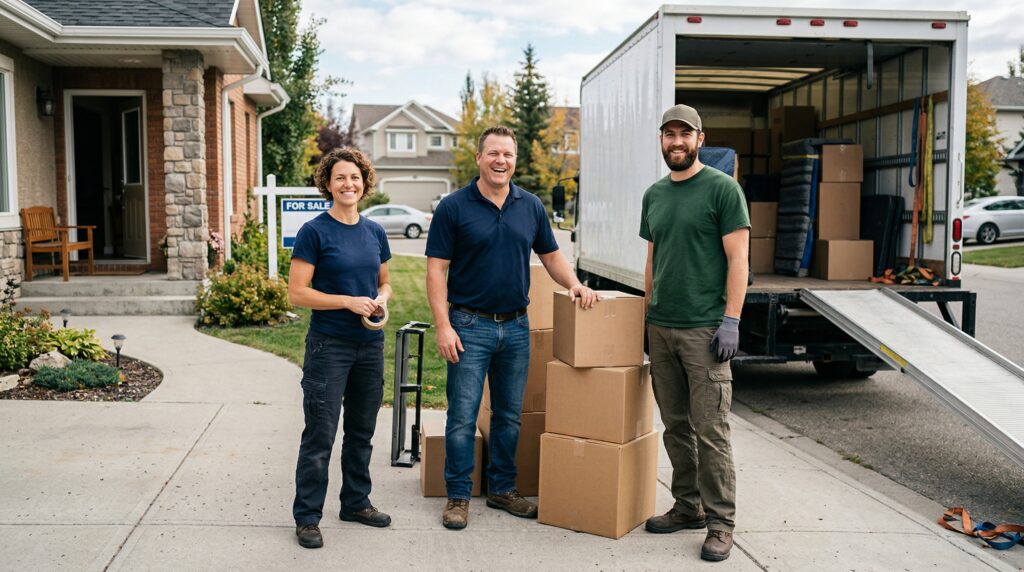
Moving somewhere in British Columbia sounds fairly straightforward until you start looking at the route. A new apartment in Vancouver might be only a few kilometres away, yet the truck needs somewhere to park, the elevator has to be booked, and half the furniture may not fit through the front door without a little manoeuvring. Moving from Vancouver to Kelowna? Now mountain highways, changing weather and travel time enter the picture.
At Magic Move, we approach each relocation as its own job rather than another address on a schedule. British Columbia has a way of making even familiar journeys interesting. Coastal rain, busy downtown streets, ferry connections and steep driveways all deserve some thought before moving day arrives.
Whether you’re relocating your family, opening a new office or heading to another BC community, good preparation makes a noticeable difference. Here’s what matters when planning a move across the province, including a few details people often discover a little too late.
Residential and Commercial Relocations Across British Columbia
Moving a household and relocating a business might involve the same cardboard boxes, but that’s about where the similarities end. At home, people worry about their furniture, electronics, kitchenware and the collection of things that somehow keeps growing in the garage. Businesses face a different problem: every hour spent moving equipment or sorting out workstations can interrupt normal operations.
Our approach at Magic Move starts with understanding what’s actually being transported. Is it a two-bedroom condo with underground parking? A detached house full of furniture? Perhaps a small office with desks, monitors, filing cabinets and a rather expensive coffee machine. Those details affect how the move should be organized, what equipment may be needed and how much time to allow.
For residential moves, packing and loading deserve particular attention. A solid wooden dresser might survive years of everyday use but still suffer damage if its drawers swing open while being carried downstairs. Glass shelves need separate protection, and large sofas sometimes require removing their legs before they can pass through narrow doorways.
Commercial relocations call for a slightly different plan. Computer equipment, office furniture and important documents should be identified before loading. Labelling workstations by department or room can save considerable confusion during unloading (especially when everyone wants their desk ready first).
We also recommend discussing the property itself before moving day. Loading restrictions, elevators, staircases and available parking can influence the entire schedule. A few measurements and photographs often reveal more than a long conversation about the approximate size of the move.
Moving in Vancouver, Victoria, Kelowna and Other BC Communities
British Columbia’s cities have distinct personalities, and you notice those differences pretty quickly when you’re trying to park a moving truck. Vancouver presents one set of challenges, Victoria another, while Kelowna brings its own mixture of apartment buildings, residential neighbourhoods and hillside properties. The distance between two addresses doesn’t always tell you how complicated the relocation will be.
Magic Move works with routes involving communities across BC, including Vancouver, Burnaby, Richmond, Surrey, Victoria, Nanaimo, Kelowna, Kamloops and other locations. Some customers are moving within the same city. Others are leaving Alberta for the coast or relocating from Vancouver Island to the mainland. The practical questions change with each journey, which is why we prefer discussing the actual addresses rather than treating the province as one enormous service area with identical conditions.
Take downtown Vancouver. You might have a building with a loading bay, a freight elevator and strict booking windows. Sounds organized, right? Usually it is, provided everything has been arranged beforehand. But if the truck arrives and another delivery vehicle is occupying the loading space, even a carefully planned morning can become complicated.
In Victoria, older homes may have narrow entrances, steep staircases or limited street parking. Kelowna properties can involve sloped driveways and access roads that deserve a closer look, particularly when moving larger items.
Smaller communities shouldn’t be overlooked either. A relocation to Penticton, Vernon or Duncan may involve longer travel between stops or fewer nearby options for last-minute packing supplies.
Our advice is simple: describe the property honestly when requesting a quote. Mention the fourth-floor walk-up, the unusually long driveway or the storage locker on the opposite side of the building. Those details aren’t complaints. They’re useful information that helps build a workable plan.
How Mountains, Ferries and Coastal Routes Affect Moving in BC
One of the interesting things about moving in British Columbia is how dramatically the landscape changes during a single journey. You might leave Vancouver under low grey clouds, pass through mountain valleys and arrive in the Interior under completely different conditions. A route that seems easy on a map can take longer than expected once traffic, roadwork, elevation changes and weather become part of the journey.
For anyone moving between the Lower Mainland and Interior BC, highway conditions deserve attention. Routes through the mountains can experience snow, heavy rain, reduced visibility or temporary restrictions depending on the season. It’s worth checking DriveBC before departure, particularly during colder months or periods of unsettled weather.
And then there are the ferries.
Moving between Vancouver Island and the mainland means coordinating road transportation with a sailing. A moving truck is not necessarily handled like an ordinary passenger vehicle. Its height, length and commercial classification can affect booking requirements and available space.
For example, routes connecting Tsawwassen with Swartz Bay or Duke Point are common options for mainland-to-island travel. But choosing the crossing is only part of the calculation. The truck still needs to reach the departure terminal, complete check-in and continue to the final address after arriving on the other side.
A missed sailing can affect the remaining delivery schedule, particularly on a busy holiday weekend. We recommend reviewing BC Ferries requirements and arranging suitable reservations ahead of time whenever applicable.
Coastal weather introduces other practical considerations. Rain-soaked sidewalks, slippery outdoor stairs and wet loading areas can complicate furniture handling. Even the little things matter, like keeping protective coverings accessible rather than buried beneath the first stack of boxes.
Good route planning isn’t about predicting every possible delay. It’s about leaving enough flexibility that one unexpected interruption doesn’t throw the whole relocation into chaos.
What to Consider When Moving to Vancouver Island or Interior BC
Moving to Vancouver Island or the BC Interior often means more than changing your postal code. Daily routines can look quite different depending on where you settle. Someone leaving a Vancouver condominium for a house near Nanaimo may suddenly have a garage, a garden and considerably more storage space. A family heading to Kelowna could be trading coastal drizzle for hotter summers and colder winter conditions.
Of course, none of those lifestyle changes makes the packing disappear. A long-distance relocation still involves deciding what to take, preparing furniture for transport and working out when your belongings can arrive at the new property. The more distance involved, the more important those early decisions become.
When planning an island move, start by confirming the possession dates for both properties. If you’re leaving your current home on Friday but cannot access the new one until Monday, your belongings need somewhere to go in between. Storage may be an option, but the timing and arrangements should be discussed before confirming the move.
For Interior destinations, consider accessibility at the delivery address. Newer subdivisions may have straightforward access, while rural homes and hillside properties sometimes involve narrow roads, gravel driveways or limited turning space.
It’s also worth taking an inventory of large items before accepting them as part of the load. That oversized sectional might look perfect in your current living room, but will it fit through the entrance of the new house? Measure first. Buying a replacement is rarely anyone’s favourite moving-day surprise.
At Magic Move, we encourage customers to discuss unusual furniture, access concerns and delivery preferences early. It gives everyone a clearer idea of what the relocation involves and helps avoid preventable complications when the truck arrives.
Planning a Smooth and Affordable Move in British Columbia
Let’s talk about the part nearly everyone asks about first: cost. How much should a move in British Columbia actually cost? There isn’t one useful answer because a compact apartment relocation in Burnaby and a full-house move from Vancouver to Victoria involve very different amounts of labour, transportation and planning. Even two homes with identical floor plans can produce surprisingly different workloads.
One household might own only the essentials. Another has an overflowing basement, exercise equipment, a heavy dining table and several dozen boxes of books. Books, by the way, have a remarkable talent for turning small cardboard boxes into something nobody wants to lift twice.
At Magic Move, we recommend providing a realistic description of your belongings when requesting an estimate. Accurate information is far more useful than trying to make the move sound smaller to secure an attractive initial price.
Several practical decisions can help keep expenses under control:
- Sort your belongings before packing. Selling or donating unused furniture means fewer items to transport.
- Pack non-essential belongings early. Books, decorations and seasonal clothing can usually be boxed well before moving day.
- Label boxes by destination room. It makes unloading easier and reduces unnecessary carrying.
- Reserve elevators and loading areas in advance. Delays caused by unavailable building access can quickly eat into the schedule.
- Choose suitable dates when possible. Flexible scheduling may give you more options, especially around busy moving periods.
- Discuss special items beforehand. Pianos, large appliances, fragile furniture and unusually heavy objects may require additional planning.
It’s also worth examining what’s included in a moving quote. Ask about the expected labour, transportation charges, travel time, packing materials and any additional services you might need. For an island relocation, ferry-related expenses and scheduling should be clarified as well.
One more small recommendation: prepare a separate bag with medication, chargers, important documents, basic toiletries and a change of clothes. Keep it with you instead of putting it on the truck. After a long day of moving, searching through fifteen identical boxes for a phone charger is nobody’s idea of a relaxing evening.
And don’t leave everything until the final morning. Packing the kitchen always seems manageable until you realize that every cupboard contains three times as much as you remembered.
Whether you’re moving across Vancouver, relocating your office or starting a new chapter somewhere in British Columbia, the best results usually come from sensible preparation and clear communication. At Magic Move, we help customers organize their relocations around the details that matter: the belongings being transported, the properties involved and the journey between them.
Planning a move in BC? Contact Magic Move to discuss your route, moving requirements and preferred dates. Tell us what you’re moving and where it’s going. We’ll help you explore a practical approach to getting your belongings to their new home.
 Skip to content