 Skip to content


Moving day is rarely completely “perfect.” Even if the boxes are packed, the keys are ready, and the movers are already on the way, something always seems to appear at the last minute: a charger left in the outlet, documents in a drawer, a bag of dog food, or that one kettle that was “definitely going separately.” In Calgary, you can easily add weather, parking near a condo building, a booked elevator, wet walkways after snow, and regular human tiredness to the list.
The good news: most of the chaos can be reduced in advance. Not with magic, but with a proper checklist. At Magic Move, we see this on moving jobs all the time: when pathways are clear, boxes are labeled, the parking spot is ready, and the essentials box is kept separately, the day feels calmer. Yes, moving is still moving. But it no longer feels like running around the home asking “where is the tape?” five minutes before the team arrives.
Why Moving Day Feels Stressful
Moving day becomes stressful not only because of heavy furniture. Most of the tension usually comes from small things that pile up one after another. Boxes are not labeled – now nobody knows where the kitchen items are and where the office things went. The hallway is blocked – movers have to work around bags, shoes, a child’s bike, and a box marked “miscellaneous” (the most mysterious category in moving history). Parking was not prepared – the moving truck ends up farther away than expected, and every trip takes more time.
In Calgary, this is especially noticeable in apartment and condo buildings. The elevator may be busy, the loading zone may be blocked, there may be snow near the entrance, and building management may ask you to follow a specific time window. So the move itself may not be difficult, but suddenly there are too many small decisions around it. What should go first? Where should the boxes go? Who has the keys? Where are the documents? A good checklist helps you avoid keeping everything in your head. And on moving day, your head is already busy with the new address, calls, kids, pets, and the thought: “I just hope the sofa fits through the door.”
Prepare a Clear Path for the Movers
One of the simplest ways to speed up your move is to prepare a clear path for the movers. It sounds obvious, but in real life, pathways often become the main bottleneck. The hallway is full of boxes, shoes are near the front door, someone’s bike is in the building entrance, and a few bags were left near the elevator “just for a minute.” As a result, the team spends time not only carrying items, but also carefully navigating around obstacles.
Before the movers arrive, walk the route from your apartment or house to the truck as if you were carrying a large cabinet yourself. Does the door open fully? Is the doormat in the way? Is there enough space to turn with a mattress? Is the entrance slippery? In Calgary winters, it is especially important to clear snow and ice from the walkway if you are moving from a private house. In an apartment building, check the hallway, elevator, and exit to the loading zone. The easier the route, the lower the chance of bumping walls, corners, doors, or your belongings. Moving does not need to become an obstacle course if that course can be cleared in 15 minutes.
Pack an Essentials Box
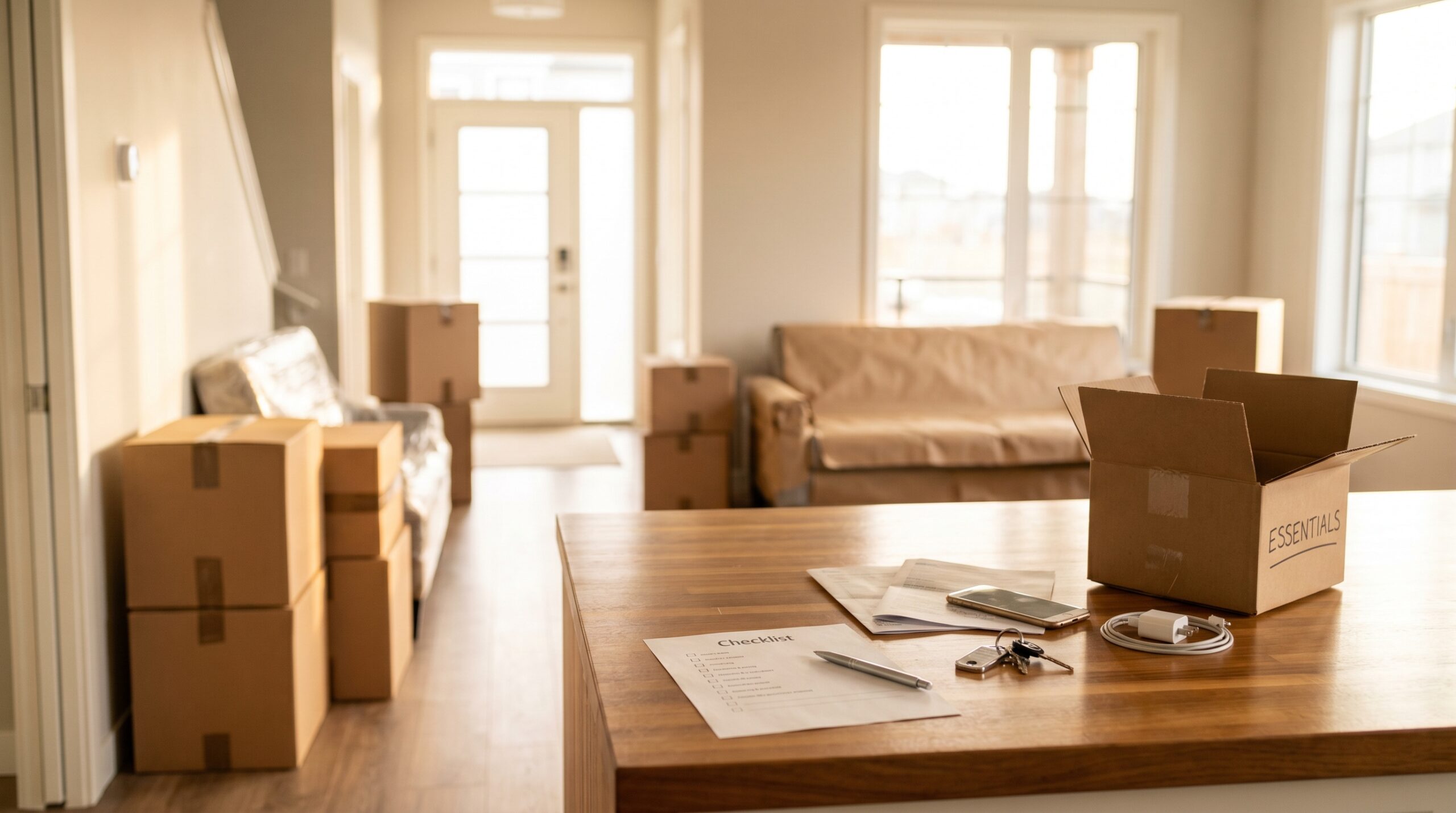
An essentials box is the box with things you will need right away. Not tomorrow, not “once we unpack the living room,” but during the first few hours after the move. It is better to keep this box close, not send it into the general flow of boxes. Because searching for medicine, a charger, or keys among twenty identical boxes in the evening after unloading is not exactly anyone’s idea of fun.
What should you put inside? Documents, keys, chargers, medication, basic hygiene items, water, snacks, a change of clothes, toilet paper, wipes, and a small first-aid kit. If you have children, add what they need for the first evening: a favorite toy, clothes, a bottle, snacks. If you have pets, add food, a bowl, a leash, bags, and a carrier. For business owners or a home office, keep your laptop, important cables, and documents separately. Label this box clearly: “Open First” or “Essentials.” Better yet, do not place it in the truck unless necessary. Keep it in your own vehicle or in a spot you control.
Label Boxes by Room
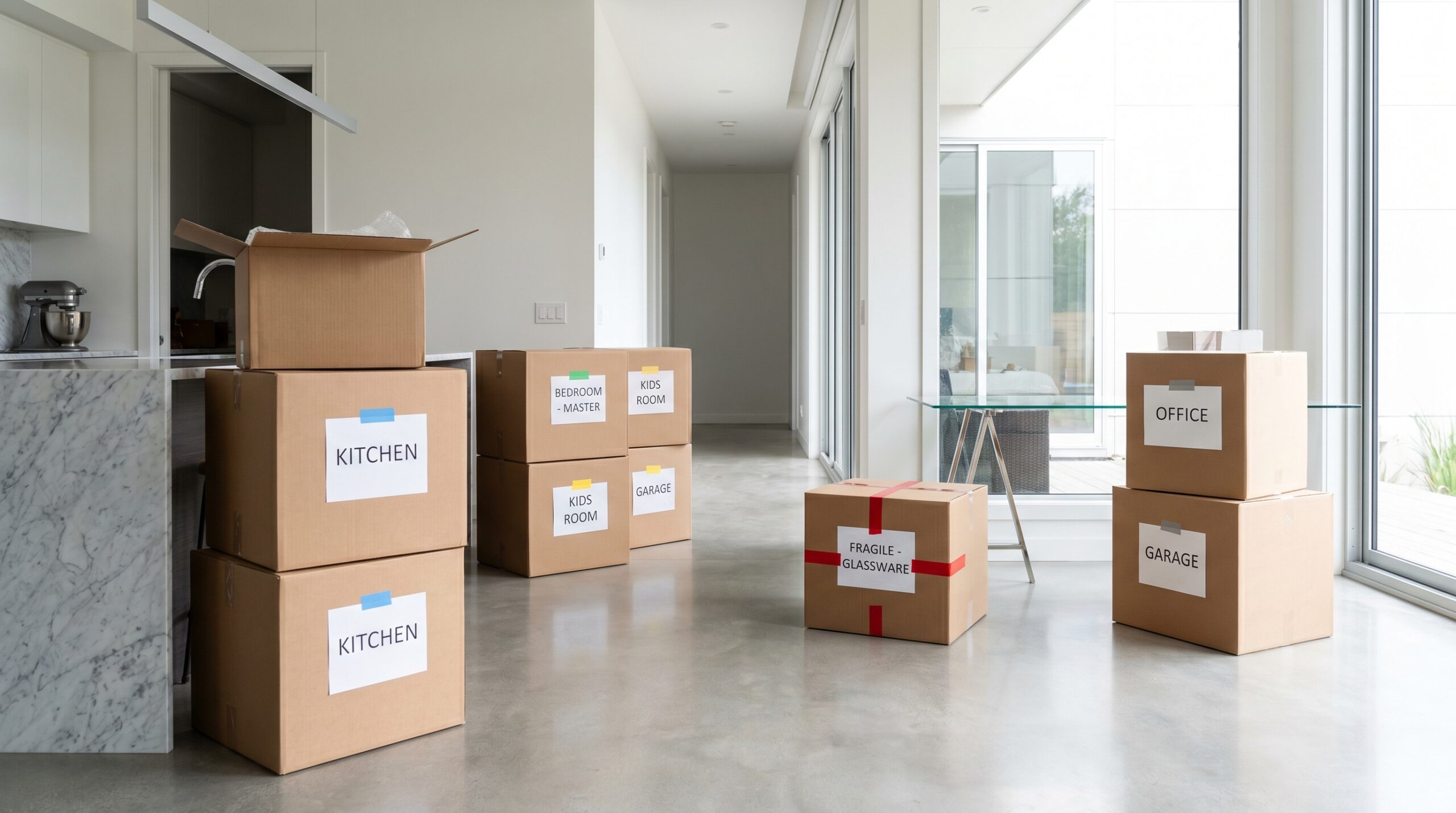
Labeled boxes save energy during unloading and especially after it. When every box has a clear label – Kitchen, Bedroom, Bathroom, Office, Kids Room, Garage – movers immediately understand where it should go. It may sound like a small thing, but in the new place the difference is huge. Instead of one mountain of boxes in the living room, you get a more logical setup by room.
It is better to label boxes not only on top, but also on the side. During loading, the top may be covered by another box, while the side label remains visible. For fragile items, add “Fragile” and mark the direction if needed. But do not write “very urgent” on every second box – on moving day, almost everything feels urgent. It is better to highlight what is truly important: dishes for the first evening, bedding, documents, work items. If the move is large, you can use colored stickers by room. It is a simple method, but it works well, especially in a home with multiple floors. Movers cannot read minds, but they work very well with a clear system.
Keep Parking and Building Access Ready
Parking and building access are among the most important details for a Calgary move. Even the most careful team cannot work quickly if the truck cannot be parked close to the entrance. An extra 30-40 meters to the door may seem like nothing until someone has to carry a sofa, dresser, boxes, mattresses, and appliances that distance. And if it is snowing or raining, the distance feels even longer.
If you are moving from a condo or apartment building, check the building management rules in advance. Do you need to book the elevator? Is there a separate loading zone? Can you use the service entrance? What hours are allowed for move-out or move-in? Some buildings require you to notify the concierge or manager ahead of time. For a private house, check the driveway, street parking, and access to the entrance. If the spot near the home is taken, try to free it up beforehand. Yes, it sounds a little boring. But these are the exact details that make moving day calmer. The truck is close, the elevator is ready, the doors open properly, the route is clear – and the work moves without unnecessary stress.
Take Photos Before the Move
Photos before the move help prevent confusion. This is not about distrust – it is about convenience. Take photos of how your TV, computer, router, gaming console, or sound system is connected. A few hours later, when you are standing in your new home surrounded by boxes, these photos may save your evening. Instead of wondering “where did this black cable go?” you will have a simple hint on your phone.
It is also useful to photograph furniture before disassembly, especially if it has unusual fasteners, shelves, glass parts, or complicated hardware. Take photos of walls, floors, and doorways in both the old and new place if it is a rental property. For fragile or valuable items, it is helpful to have photos before packing as well. This adds order to the process and helps avoid confusion. Moving involves a lot of motion: boxes are carried, furniture is turned, blankets are removed, straps are tightened. Photos give you a calm point of reference. Your phone is already in your hand anyway – let it do more than just handle calls.
Check Every Room Before Leaving
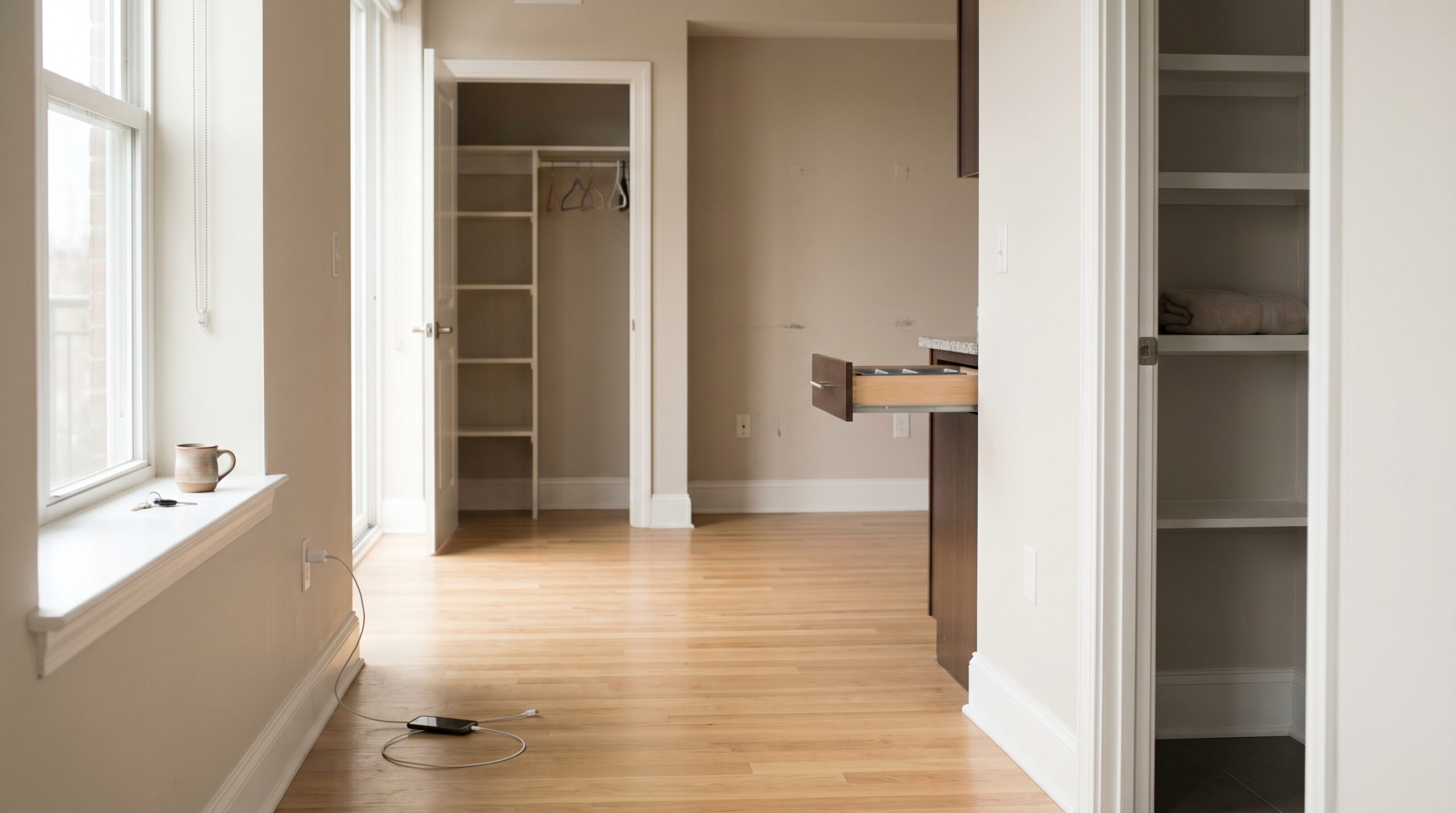
Before closing the door to your old home or apartment, do a final walkthrough. Not a quick glance from the hallway, but a proper check. Open closets, drawers, the pantry, balcony, garage, storage room, bathroom, and kitchen. Look under the sink, behind doors, on top shelves, and in outlets. Chargers and small items love to stay exactly where you least expect them.
Pay extra attention to areas that were not actively used during loading. For example, the basement, laundry room, pantry, entry closet, shelf above the fridge. In an apartment building, do not forget the storage locker and mailbox keys. If you have children, check under the bed and behind the sofa – small treasures often live there, and missing them can easily turn into an evening family drama. A final walkthrough takes 10-15 minutes, but it can save you an extra trip across Calgary. And after a long moving day, that trip is probably not on your wish list.
What to Do When You Arrive at the New Place
When you arrive at the new address, do not rush to open every box right away. First, help the movers understand the layout. Show them where the bedroom, kitchen, living room, office, garage, and basement are. If the rooms look similar or there are several floors, you can place simple paper labels on the doors in advance. This is especially helpful when unloading moves quickly and there are many items.
Large furniture is best placed close to its final spot right away. Sofa – in the living room, mattresses – in the bedroom, desk – in the office. Moving everything again later will be harder, especially once tiredness has already arrived and the home smells like cardboard, coffee, and a new beginning. Make sure the essentials box is accessible and not buried deep in the garage. Place fragile boxes separately or directly in the correct room. If the movers are reassembling furniture, show them what should be assembled first. Usually, that means beds, tables, and larger cabinets. After a long move, it feels especially good when at least the place to sleep is already ready.
How Magic Move Helps Make Moving Day Easier
Magic Move helps make moving in Calgary more organized and calm. We understand that for a client, this is not just “moving things.” It is a day when the usual route, address, order at home, and sometimes even a whole stage of life changes. That is why it is important for us to work carefully, clearly, and without unnecessary rush. A good move starts not with strength, but with organization.
The Magic Move team helps with loading, carrying, furniture protection, disassembly and reassembly, handling large and fragile items, and placing belongings in the new home. We take into account the volume, type of property, building access, parking, floors, elevator, and the specific details of each move. Moving an apartment, townhouse, house, or office requires a different approach – and that is normal. In one case, the main task is to organize boxes quickly. In another, it is carefully carrying heavy furniture down the stairs. In another, it is keeping within an elevator booking window. Our goal is to keep moving day from turning into a chaotic race and help it follow a clear plan.
Final Moving Day Checklist
The final checklist is best prepared in advance and kept close on moving day. Not in your head, not as “I will definitely remember,” but in your phone or on a piece of paper. On moving day, memory works strangely: you may remember the new unit number, but forget that the kettle is still in the kitchen. That is normal (no panic). This is exactly what the checklist is for.
- Confirm the movers’ arrival time and both addresses.
- Prepare a parking spot or loading zone for the moving truck.
- Book the elevator if you are moving from a condo or apartment building.
- Clear pathways, stairs, hallways, and the front door area.
- Label boxes by room.
- Pack an essentials box and keep it separate.
- Check documents, keys, chargers, and medication.
- Take photos of electronics connections and important items.
- Protect fragile items and label those boxes separately.
- Do a final walkthrough of every room before leaving.
- At the new place, show the movers where furniture and boxes should go.
- Make sure the most important items are accessible after unloading.
Moving in Calgary can be a busy day, but it does not have to be chaotic. The clearer the preparation, the calmer the day. And if you want an experienced team to handle the heavy part of the work, Magic Move can help make your moving day careful, organized, and much less stressful.
